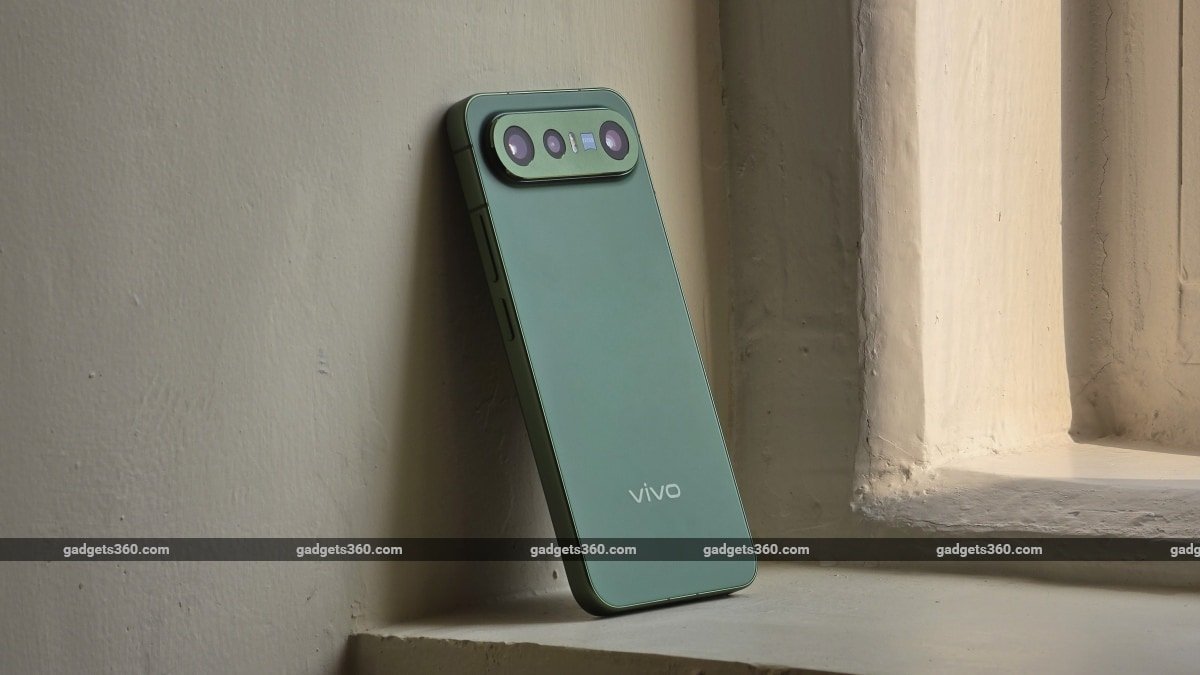
Technical Specifications and Architectural Breakdown
At the core of the Vivo X500 FE lies an engineering philosophy centered on thermal management and energy density. The device is built around an LTPO AMOLED panel, a technology choice that enables dynamic refresh rate scaling from 1Hz to 120Hz. This granular control is essential for managing the power draw of the display, which remains the primary drain on mobile hardware. By utilizing an LTPO backplane, the X500 FE ensures that static content consumption—such as reading or document review—minimizes battery depletion without sacrificing the fluid responsiveness expected in high-end devices.
Under the hood, the integration of the Snapdragon 8 Gen 5 processor marks a significant jump in computational throughput. This chipset is engineered for high-intensity workloads, offering improved NPU performance for local AI processing and superior power efficiency under heavy graphical loads. Perhaps the most striking engineering decision is the inclusion of a 6,500mAh silicon-carbon battery. By moving beyond the 5,000mAh industry standard, Vivo is signaling a shift toward multi-day usage profiles. To support this massive capacity, the device incorporates advanced power management integrated circuits (PMICs) that facilitate 40W wireless charging, ensuring that the time-to-charge ratio remains competitive despite the increased cell volume.
Industry Landscape and Competitive Comparison
The Vivo X500 FE enters a market where flagship differentiation has become increasingly difficult. Most manufacturers have converged on similar camera sensor sizes and display resolutions, leaving battery life and thermal efficiency as the remaining frontiers for genuine product distinction. By prioritizing a 6,500mAh cell, Vivo is challenging the industry’s reliance on thin-chassis designs that necessitate frequent mid-day charging. The following table provides a direct comparison of the X500 FE against current market benchmarks, illustrating the hardware divergence Vivo is pursuing.
| Specification | Vivo X500 FE | Current Flagship A | Current Flagship B |
|---|---|---|---|
| Battery Capacity | 6,500mAh | 5,000mAh | 5,100mAh |
| Primary Sensor | 50MP IMX921 | 50MP IMX890 | 48MP Custom |
| Wireless Charging | 40W | 15W | 30W |
| Processor | Snapdragon 8 Gen 5 | Snapdragon 8 Gen 4 | Dimensity 9400 |
This comparison highlights a clear intent: the X500 FE is designed for users who prioritize total uptime over absolute thinness. While competitors focus on maximizing camera zoom ranges or ultra-slim profiles, Vivo is optimizing for the “prosumer” segment—users who demand consistent performance throughout a 16-hour workday without tethering to a power bank.
Practical Consumer & Enterprise Takeaways
For the average consumer, the X500 FE presents a compelling value proposition. The upgrade cycle for smartphones has lengthened, with users now holding onto devices for three to four years. In this context, a 6,500mAh battery is not just a convenience; it is a hedge against battery degradation. Over time, as lithium-ion cells lose their maximum capacity, starting from a higher baseline ensures the device remains functional for a full day even after two years of heavy use.
Enterprise buyers should also take note of the X500 FE. The combination of the Snapdragon 8 Gen 5 and the high-capacity battery makes this an ideal candidate for field work, logistics, and data-heavy mobile tasks. Unlike consumer-grade phones that often throttle performance to preserve battery, the internal architecture of the X500 FE is designed to sustain peak clock speeds for longer durations, which is critical for running complex analytical applications or real-time data visualization tools in the field.
Frequently Asked Questions
How does the 6,500mAh battery impact the overall weight and ergonomics of the Vivo X500 FE?
While the increased battery capacity does necessitate a slightly thicker chassis, Vivo has utilized high-density silicon-carbon battery chemistry to mitigate the bulk. The device maintains a balanced center of gravity, ensuring that the added mass does not impede one-handed usability.
Will the Snapdragon 8 Gen 5 processor be compatible with global 5G bands upon launch?
Yes. The regulatory filings in Malaysia, Singapore, and Europe confirm that the X500 FE is being tuned for a wide range of global sub-6GHz and mmWave frequency bands, ensuring broad carrier compatibility across international markets.
Is the 40W wireless charging proprietary, or does it support universal standards?
The X500 FE is designed for cross-compatibility. While it achieves peak 40W speeds with Vivo-certified charging pads, it remains fully compliant with the Qi2 wireless charging standard for universal interoperability at standard speeds.
The Bottom Line
The Vivo X500 FE is a pragmatic response to the current plateau in smartphone innovation. By eschewing the industry’s obsession with marginal camera improvements and instead focusing on the fundamental pillars of battery capacity, thermal efficiency, and sustained processing power, Vivo has created a device that prioritizes utility. The regulatory approvals are merely the final administrative hurdle for a product that is poised to offer a genuine alternative to the standard flagship fare. For users who value longevity and consistent performance, the X500 FE is a significant development, proving that there is still room for innovation in the high-end mobile segment.

3 thoughts on “Vivo X500 FE Gains Regulatory Approval for Global Debut”