Technical Specifications and Architectural Breakdown
Modern data centers are no longer mere warehouses for servers; they are massive, integrated power stations that rival small cities in their energy consumption. A Tier IV data center, the current gold standard for reliability, requires redundant power and cooling systems that ensure 99.995% uptime. The architectural foundation of these sites relies on high-density power distribution units (PDUs) and uninterruptible power supply (UPS) systems that must handle loads measured in tens of megawatts.
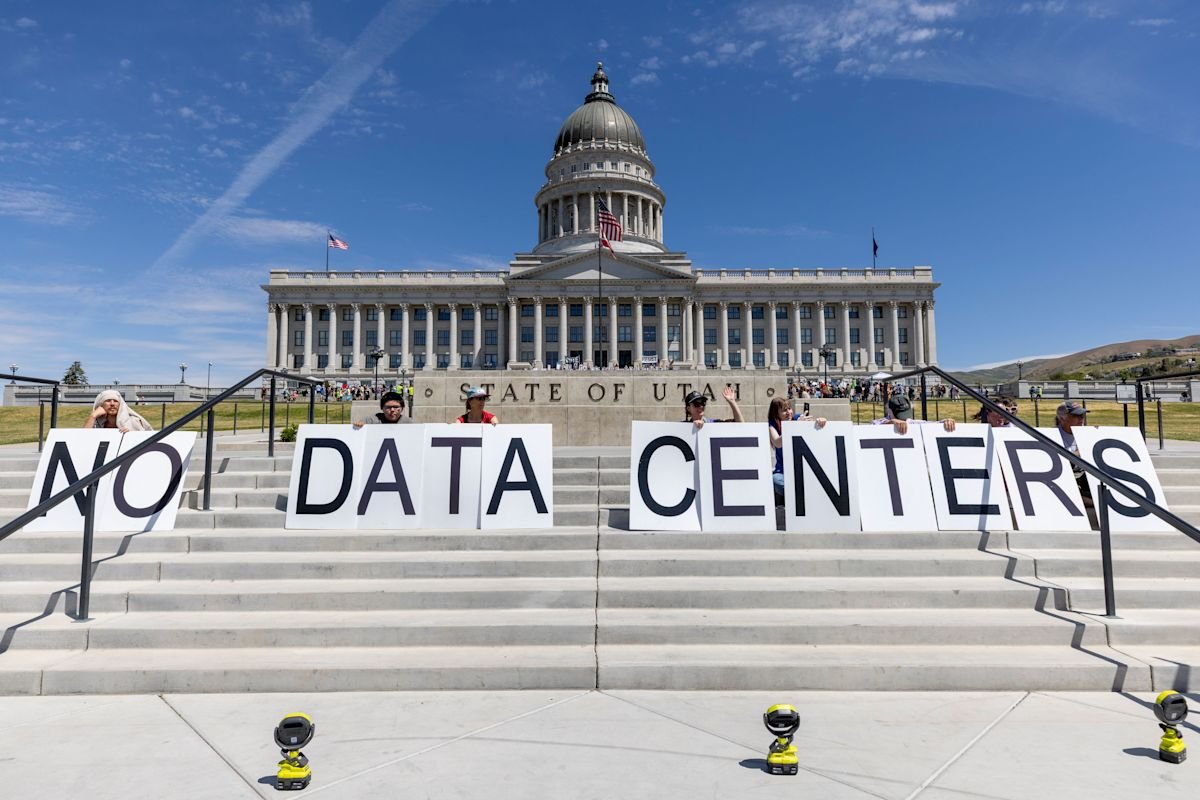
The primary technical challenge lies in the cooling-to-compute ratio. As AI-focused hardware—specifically GPUs like the Nvidia H100 and B200—generates significant thermal output, traditional air cooling is becoming obsolete. The industry is shifting toward liquid cooling, utilizing direct-to-chip or immersion cooling technologies. These systems circulate dielectric fluids or water to pull heat directly from the processor, allowing for higher rack densities. While this improves efficiency, it complicates the integration with municipal water systems and local electrical grids. A single hyperscale facility now requires a dedicated substation, often necessitating the construction of new high-voltage transmission lines that cut through rural and suburban landscapes, further inflaming local tensions.
Industry Landscape and Competitive Comparison
The industry is currently divided between legacy colocation providers, which lease space to various enterprises, and hyperscale operators, such as Amazon Web Services (AWS), Google, and Microsoft, which build custom facilities for their own cloud ecosystems. The competitive landscape is shifting as the cost of energy—historically a secondary concern—becomes the primary driver of site selection and profitability.
| Feature | Legacy Colocation | Hyperscale Facility | Edge Data Center |
|---|---|---|---|
| Power Density | 5-10 kW per rack | 30-100+ kW per rack | 2-5 kW per rack |
| Primary Driver | Enterprise redundancy | AI/Cloud scale | Latency reduction |
| Grid Impact | Moderate | High (Dedicated Substation) | Low (Existing grid) |
The comparison reveals why hyperscale facilities are the primary targets of the Ratepayer Protection Act (RPA). Unlike edge facilities, which serve local traffic, hyperscale sites pull massive amounts of power from the regional grid. When these facilities require grid upgrades, the current regulatory framework often socializes those costs across all ratepayers. This has created a bipartisan friction point: taxpayers are essentially subsidizing the infrastructure costs of some of the world’s most profitable technology firms, leading to calls for mandatory independent power generation for new builds.
Practical Consumer & Enterprise Takeaways
For enterprise leaders and infrastructure planners, the era of “build anywhere” is over. Organizations looking to expand their data footprint must now conduct rigorous due diligence that goes beyond latency and bandwidth. Regulatory risk is now a primary financial metric. Companies must account for potential “power taxes” or legislation that forces them to build private microgrids, such as those proposed under the GRID Act.
Cost-benefit analyses should now incorporate the “Social License to Operate.” Projects that ignore local community concerns regarding noise pollution, water consumption, and land usage are increasingly likely to face litigation or outright bans. Enterprises should prioritize brownfield developments—repurposing existing industrial sites—over greenfield projects on undeveloped land. Furthermore, energy-efficient cooling architectures are no longer just an environmental goal; they are a risk-mitigation strategy to minimize the facility’s profile on the local grid. When selecting a provider, enterprises should demand transparency regarding the facility’s power sourcing and its history of grid-upgrade cost-sharing.
Frequently Asked Questions
What is the Ratepayer Protection Act (RPA) and how does it affect data center costs?
The RPA is a legislative proposal aimed at preventing utility companies from passing the costs of grid upgrades—specifically those necessitated by high-consumption data centers—onto residential and small-business ratepayers. If enacted, it would force tech companies to internalize the costs of the transmission lines and substations required to support their operations.
Why are local communities opposing new data center projects?
Opposition typically centers on three issues: the strain on local power grids leading to potential rate hikes, the massive consumption of water for cooling purposes, and the aesthetic/environmental impact on rural or residential land. Residents often argue that the economic benefits, such as tax revenue and minimal job creation, do not outweigh the long-term infrastructure burden.
What is the difference between the RPA and the GRID Act?
While the RPA focuses on cost allocation and protecting ratepayers from infrastructure bills, the GRID Act is more prescriptive regarding energy autonomy. The GRID Act would mandate that new, large-scale data centers operate on independent, off-grid power sources, such as on-site microgrids or dedicated renewable energy plants, to ensure they do not destabilize the public electricity supply.
The Bottom Line
The rapid growth of US data centers has reached a point of systemic friction. The industry can no longer rely on the assumption that infrastructure expansion will be met with open arms by local municipalities or subsidized by the general public. As federal policy shifts toward a more protectionist and cost-conscious stance, the burden of proof is moving to the operators. The future of the sector depends on a transition toward energy autonomy and a more collaborative approach to community integration. Those firms that adopt sustainable, independent power models will likely navigate the coming regulatory volatility, while those that remain dependent on public grid subsidies face a period of significant political and financial instability.
