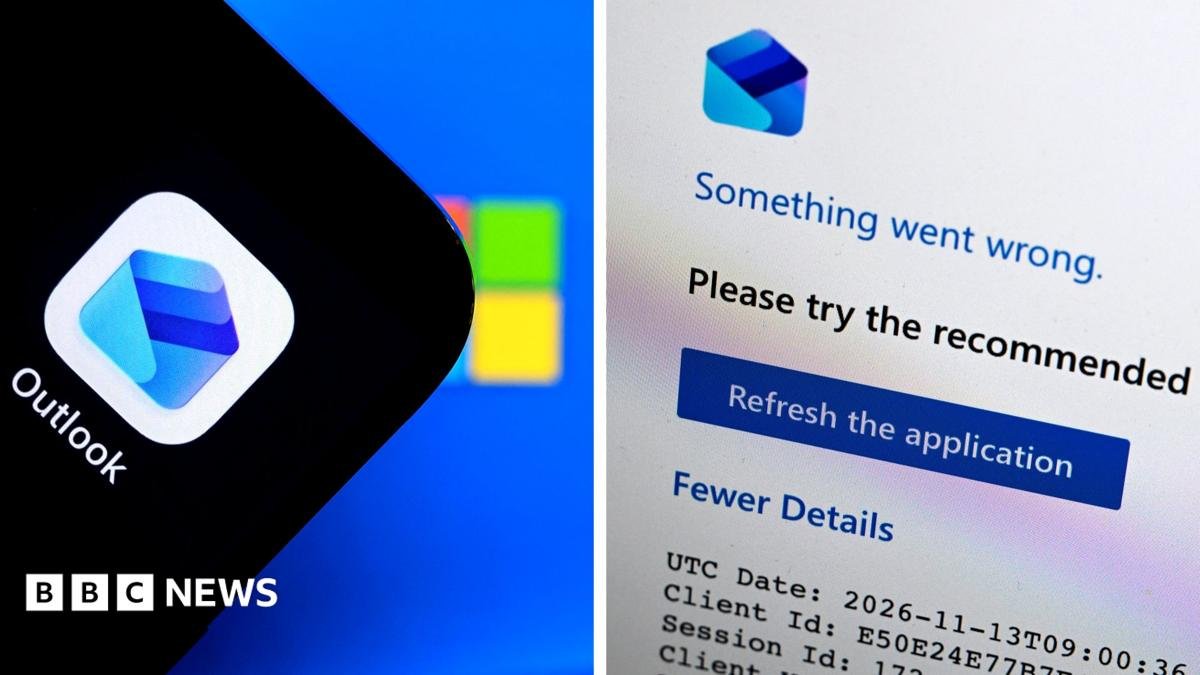
The recent Microsoft digital outage, which paralyzed operations across more than 70 countries, serves as a stark reminder of the inherent fragility embedded within our modern, hyper-connected economy. When core services such as Outlook and Copilot vanished from the global stage, the disruption was not merely an inconvenience; it was a systemic shock that halted air travel, crippled financial transactions, and stalled enterprise workflows. While Microsoft has clarified that the failure stemmed from a routine network capacity upgrade rather than a malicious cyberattack or an unforeseen artificial intelligence anomaly, the event has reignited a critical debate regarding the resilience of our global digital infrastructure. As we move toward an era of total cloud integration, this incident forces a reckoning with the risks associated with centralized, massive-scale network management.
Technical Specifications and Architectural Breakdown
To understand the scope of the Microsoft digital outage, one must look at the architecture of hyperscale cloud environments. The failure occurred during a scheduled deployment phase intended to increase network capacity. In these environments, engineers utilize sophisticated automated orchestration tools to push configuration updates across thousands of data centers simultaneously. The incident highlights the vulnerability of the “network fabric”—the underlying layer of protocols and routing tables that ensure data packets reach their intended destinations with millisecond precision.
The technical root cause was a synchronization error. When updating network infrastructure at this scale, providers rely on consistency models that ensure all nodes in a cluster reflect the same state. A minor misconfiguration in the deployment script led to a state of divergence, where different segments of the network began rejecting traffic or routing it into circular loops. Because modern cloud services are highly interdependent—where an authentication service might depend on a database that depends on a specific load balancer—the failure triggered a cascading effect. This is often referred to as a “blast radius” issue; in a tightly coupled system, the failure of a single control plane component can propagate across the entire architecture, rendering redundant systems ineffective because the primary configuration layer has become corrupted.
Industry Landscape and Competitive Comparison
Microsoft is not alone in navigating these turbulent waters. The challenge of balancing rapid feature deployment with the requirement for “five-nines” (99.999%) availability is a burden shared by all major cloud service providers (CSPs). AWS and Google Cloud have historically faced similar, albeit less publicized, failures. The industry standard has shifted from preventing all errors—a statistical impossibility—to optimizing for rapid detection and automated rollback.
| Feature | Microsoft Strategy | AWS Approach | Industry Standard |
|---|---|---|---|
| Deployment Method | Automated Global Push | Canary/Regional Rollouts | Staged Deployment |
| Failure Recovery | Automated Rollback | Traffic Redirection | Fault Isolation |
| Redundancy Focus | Control Plane Stability | Data Plane Resilience | Multi-Region Failover |
When comparing these strategies, it becomes clear that the industry is trending toward regionalized, “cell-based” architectures. By isolating services into smaller, independent cells, providers can contain the blast radius of a configuration error. Microsoft’s reliance on a global configuration push, while efficient for scaling, lacks the granular isolation that competitors like AWS have prioritized through their regionalized control plane designs. The recent outage suggests that the speed of innovation is currently outpacing the safety protocols required to manage these complex, interconnected systems.
Practical Consumer & Enterprise Takeaways
For enterprise leaders and IT decision-makers, the Microsoft digital outage serves as a mandate for diversification. The “all-in” cloud strategy, while cost-effective and operationally efficient, creates a single point of failure that can jeopardize business continuity. Organizations must move beyond basic disaster recovery plans and implement true multi-cloud or hybrid-cloud architectures. This involves maintaining critical workloads on-premises or across different cloud providers, ensuring that if one service provider faces a network-wide failure, the core business functions remain operational.
From a cost-benefit perspective, the investment in redundancy is significant. Maintaining a secondary environment or a multi-cloud strategy increases operational overhead and requires a more sophisticated engineering team. However, the cost of a global outage—measured in lost productivity, reputational damage, and contractual penalties—now frequently exceeds the cost of maintaining redundant infrastructure. Buyers should demand greater transparency from vendors regarding their deployment protocols and insist on service-level agreements (SLAs) that account for systemic failures rather than just individual service uptime.
Frequently Asked Questions
Is it possible to prevent these types of outages entirely?
In a system as complex as a global cloud network, absolute prevention is impossible. The goal of modern engineering is not the total elimination of failure, but the minimization of the blast radius and the reduction of the “mean time to recovery” (MTTR). By implementing stricter canary testing and automated circuit breakers, providers can catch errors before they propagate globally.
Should enterprises move away from centralized cloud providers?
Total migration away from the cloud is impractical for most modern businesses. Instead, the focus should be on “cloud-agnostic” architecture. By utilizing containerization technologies like Kubernetes, organizations can ensure that their applications are portable enough to shift between providers or move back to private data centers if a primary provider experiences prolonged instability.
How does this outage differ from a cyberattack?
A cyberattack typically involves an external actor exploiting a vulnerability to gain unauthorized access or cause damage. In this instance, the failure was internal—a human-authored configuration error during a maintenance window. While the symptoms (service downtime) may look similar to the end user, the root cause, remediation timeline, and security implications are fundamentally different.
The Bottom Line
The Microsoft digital outage is a definitive warning shot for the digital age. As our reliance on cloud-native services grows, the margin for error in infrastructure management shrinks. Microsoft’s technical transparency regarding the incident is a positive step, yet it highlights a broader industry problem: we are building systems that are increasingly difficult for humans to monitor and manage in real-time. Moving forward, the competitive advantage for tech giants will not be found in the speed of their feature releases, but in the robustness of their deployment pipelines and their ability to isolate failures before they cascade. For the rest of the market, the lesson is clear: resilience is not a feature you purchase; it is a discipline you must build into the very foundation of your operations.
