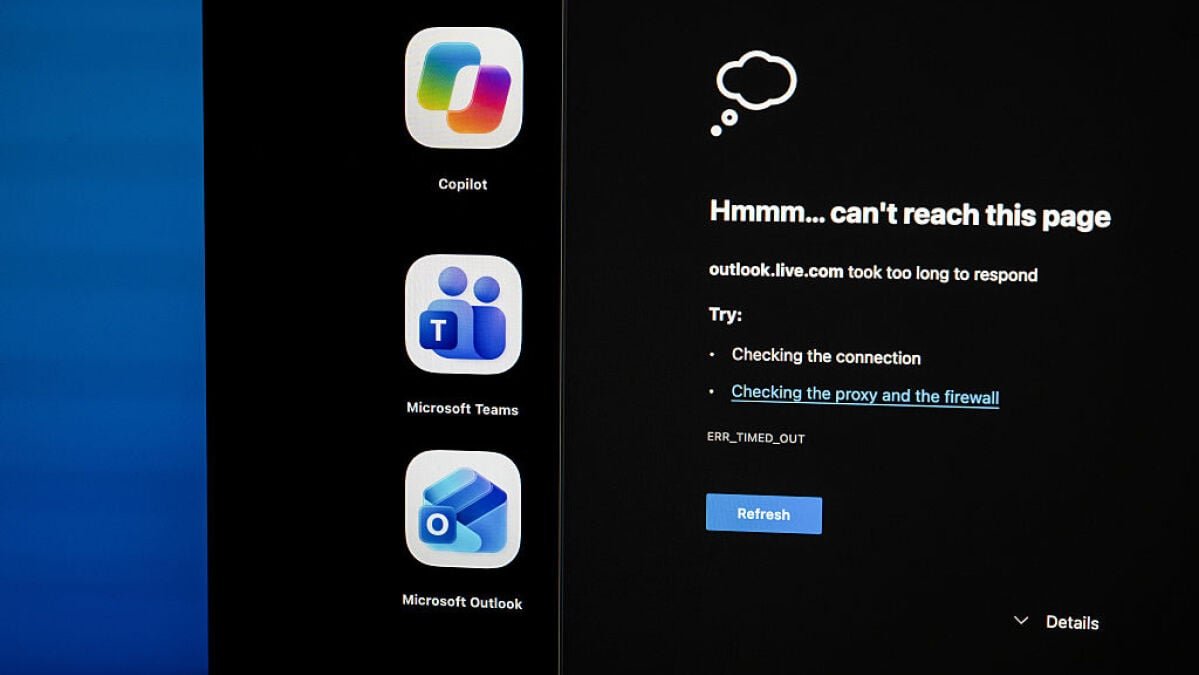
The recent Microsoft 365 outage served as a jarring reminder of the fragility inherent in our modern digital infrastructure. For a few hours, the global workforce found its primary engine of productivity—Outlook, Teams, and SharePoint—effectively paralyzed. While the service has since stabilized, the incident has ignited a necessary, rigorous debate regarding the true cost of cloud dependency and the adequacy of current enterprise service-level agreements (SLAs). As organizations scramble to reconcile lost productivity with the reality of their contractual protections, the industry is forced to confront a uncomfortable truth: the convenience of the cloud comes with a hidden, and often poorly understood, risk profile.
Technical Specifications and Architectural Breakdown
To understand the scope of the Microsoft 365 outage, one must look at the underlying architecture that powers the suite. Microsoft 365 operates on a globally distributed, multi-tenant cloud environment underpinned by the Azure backbone. The architecture relies on a complex web of microservices, load balancers, and global traffic managers designed to route user requests to the nearest healthy node. When a failure occurs, it is rarely a total blackout of the entire platform; instead, it is typically a failure of a specific authentication token service, a DNS propagation error, or a configuration update that cascades through these interconnected microservices.
The technical challenge for Microsoft lies in the “blast radius” of these updates. Because the suite is highly integrated, a configuration change in the identity management layer—such as Entra ID, formerly Azure AD—can prevent users from authenticating into any service, even if the underlying storage or messaging services are technically operational. Benchmarks for availability are measured in “nines,” with the 99.9 percent SLA allowing for approximately 43 minutes of downtime per month. However, the Microsoft 365 outage demonstrated that uptime is not a binary state. The system can be technically “up” while remaining functionally inaccessible due to latency, authentication loops, or synchronization failures, none of which are always captured by standard availability monitoring tools.
Industry Landscape and Competitive Comparison
The reliance on a single provider for email, collaboration, and document storage creates a single point of failure that many enterprises have ignored in the race toward digital transformation. While Google Workspace and other alternatives offer similar cloud-native suites, they operate under similar architectural constraints. The following table illustrates the comparative approach to uptime and service credits among major enterprise cloud providers.
| Provider | SLA Commitment | Credit Calculation Basis | Complexity of Claim |
|---|---|---|---|
| Microsoft 365 | 99.9% | User minutes per service | High (Granular/Mathematical) |
| Google Workspace | 99.9% | Monthly uptime percentage | Moderate (Automated/Tiered) |
| Zoho Workplace | 99.9% | Service credit per incident | Low (Simplified) |
The competitive landscape is defined by this granular approach to compensation. Microsoft’s model, which relies on “user minutes,” is designed to protect the provider from the massive financial liability that would arise if an outage were treated as a blanket service failure. For an enterprise with 10,000 employees, an outage affecting only the Teams component for two hours might result in a credit that barely covers the cost of a few user licenses, failing to account for the actual economic impact of lost labor hours or missed client deadlines.
Practical Consumer & Enterprise Takeaways
For IT decision-makers, the recent disruption serves as a mandate to revisit business continuity planning. Relying solely on a cloud provider’s SLA as a risk mitigation strategy is insufficient. Enterprises should consider a “defense-in-depth” approach to software availability. This includes maintaining offline-capable versions of critical applications, such as the desktop versions of Office, and ensuring that local caching is properly configured to allow for document editing during periods of intermittent connectivity.
Furthermore, organizations must evaluate their cross-platform dependencies. If an entire workflow is tethered to a single ecosystem, the impact of an outage is compounded. Diversifying communication channels—such as maintaining an out-of-band messaging platform for internal operations—can prevent complete organizational paralysis when primary tools fail. Finally, procurement departments should push for more transparent SLA language during contract renewals, specifically seeking clauses that define the “impact” of an outage beyond simple uptime percentages, though it must be noted that vendors are notoriously resistant to such changes.
Frequently Asked Questions
Are service credits a viable form of compensation for large-scale outages?
In practice, no. Service credits are designed as a symbolic acknowledgment of a breach of contract rather than a reimbursement for actual business losses. The administrative burden of proving eligibility often exceeds the financial value of the credit itself, making it an ineffective tool for recouping the costs of downtime.
How can my organization better prepare for future cloud service disruptions?
Preparation requires moving away from the assumption that the cloud is infallible. This involves testing disaster recovery scenarios, maintaining redundant communication paths, and ensuring that critical workflows can function in a degraded state without constant cloud synchronization.
Why is the credit calculation process so complex for enterprise customers?
The complexity is a feature, not a bug. By segmenting services and requiring proof of downtime on a per-user, per-service basis, providers can minimize their financial exposure. It shifts the burden of proof onto the customer, ensuring that only the most severe, verifiable failures result in significant payouts.
The Bottom Line
The Microsoft 365 outage is a diagnostic of the current state of enterprise computing. We have traded local control for the efficiency and scalability of the cloud, but we have yet to fully account for the systemic risks that this transition introduces. While Microsoft continues to iterate on its infrastructure to improve stability, the reality remains that no provider can guarantee absolute uptime. Businesses that treat cloud services as a utility—while simultaneously building the resilience to operate when that utility fails—will be the ones that thrive in an increasingly volatile digital landscape. The era of blind trust in the cloud is over; the era of verified, redundant, and resilient architecture must begin.
