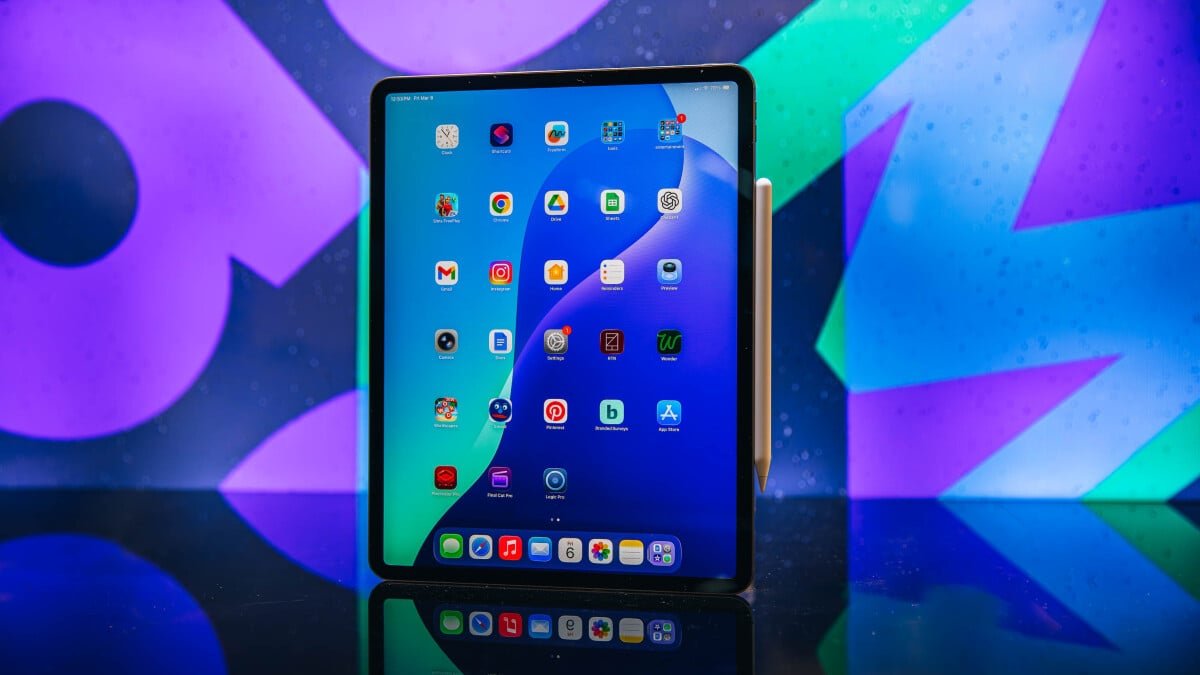
Technical Specifications and Architectural Breakdown
The engineering philosophy behind the current generation focuses on addressing the historical bottleneck of memory-constrained workflows. The decision to standardize 12GB of RAM across the iPad Air series is a calculated move to accommodate the rising demands of local artificial intelligence processing. By providing this overhead, Apple ensures that the Neural Engine and the GPU can operate in tandem without triggering the aggressive background process killing that plagued earlier iterations.
At the heart of the flagship models lies the M4 architecture, which utilizes a second-generation 3nm process. This chip is not just about raw clock speed; it is about memory bandwidth and thermal efficiency. The M4’s unified memory architecture allows the system to allocate resources dynamically between the CPU and GPU, which is critical for real-time rendering in professional applications like Final Cut Pro or high-fidelity CAD software. Furthermore, the integration of hardware-accelerated ray tracing and mesh shading brings the iPad’s graphical capabilities into direct alignment with modern desktop GPUs. The move to a 12GB floor for the Air tier is the most significant architectural change in the last five years, effectively bridging the gap between the entry-level consumer tablet and the professional-grade creative tool.
Industry Landscape and Competitive Comparison
The current market landscape is bifurcated between ultra-portable tablets and full-fat laptops, yet the iPad lineup occupies a unique middle ground. While traditional laptops still offer superior file management flexibility, the iPad’s performance-per-watt ratio remains unmatched. When comparing the current hardware tiers to previous generations, the gains in efficiency are substantial, particularly regarding the transition to the A17 Pro and M4 architectures.
| Device | Processor | RAM | Primary Use Case |
|---|---|---|---|
| iPad Air (2026) | M4 | 12GB | Professional Creative/AI Work |
| iPad Mini (2026) | A17 Pro | 8GB | Mobile Productivity/Media |
| iPad (Base) | A16 | 6GB | Education/General Consumption |
In the broader industry context, the iPad faces pressure from high-end Windows convertibles and Chromebooks. However, the iPad’s advantage lies in the tight coupling of the M4 chip with the optimized iPadOS 27 environment. While competitors often rely on bloated background services that tax system resources, the iPad maintains a leaner footprint. The performance gap between the A16-equipped base model and the M4 Air is significant, specifically in multi-threaded tasks, suggesting that Apple is clearly segmenting its audience by workload intensity rather than just display size.
Practical Consumer & Enterprise Takeaways
For the average consumer, the choice within the current Apple iPad lineup depends entirely on the intended lifecycle of the device. If the goal is long-term utility—specifically regarding the longevity of software support and the ability to run future AI-driven features—the M4-equipped Air is the pragmatic choice. The 12GB of RAM is a future-proofing measure that will likely pay dividends as iPadOS continues to integrate more complex, memory-hungry background tasks.
Enterprise users should view the iPad not as a replacement for the MacBook, but as a specialized peripheral that excels in high-mobility, high-compute scenarios. Field engineers, graphic designers, and data analysts who require a portable, touch-sensitive canvas will find the M4 architecture capable of handling tasks that were previously relegated to desktop workstations. However, users who require deep file system access or complex legacy software compatibility may still find the limitations of iPadOS 27 to be a hurdle. The cost-benefit analysis favors the Air for professional users, while the base model remains the gold standard for general education and media consumption, offering the best value for those who do not require the overhead of the M4 chip.
Frequently Asked Questions
Is the 12GB of RAM in the new iPad Air necessary for a casual user?
For a user whose primary activities include web browsing, streaming, and light word processing, 12GB of RAM is likely excessive. However, if you plan to keep the device for more than four years, the extra memory will ensure that the tablet remains responsive as web content and applications become more resource-intensive.
How does the A17 Pro in the iPad Mini compare to the M4?
The A17 Pro is highly efficient and capable for mobile gaming and productivity, but it lacks the sustained thermal headroom and multi-core performance of the M4. The M4 is designed for sustained heavy workloads, whereas the A17 Pro is optimized for burst performance in a smaller chassis.
Does iPadOS 27 truly make the iPad a desktop replacement?
It depends on your workflow. For creative professionals and those who rely on a touch-first interface, it is highly capable. For users who depend on complex file management, terminal access, or specific desktop-only software, the iPad remains a powerful companion device rather than a complete replacement for a traditional computer.
The Bottom Line
The 2026 Apple iPad lineup represents a maturation of the tablet category. By prioritizing memory capacity and high-performance silicon, Apple has successfully moved the iPad away from the “glorified phone” critique and into the realm of legitimate, professional-grade computing. The hardware is now powerful enough to outlast the software’s current limitations. For the enterprise, this lineup offers a compelling argument for deployment in specialized workflows. For the consumer, it offers a device that is finally capable of growing alongside their needs. While the software layer still requires further refinement to match the raw potential of the M4 chip, the hardware foundation is, for the first time, beyond reproach.
