Technical Specifications and Architectural Breakdown
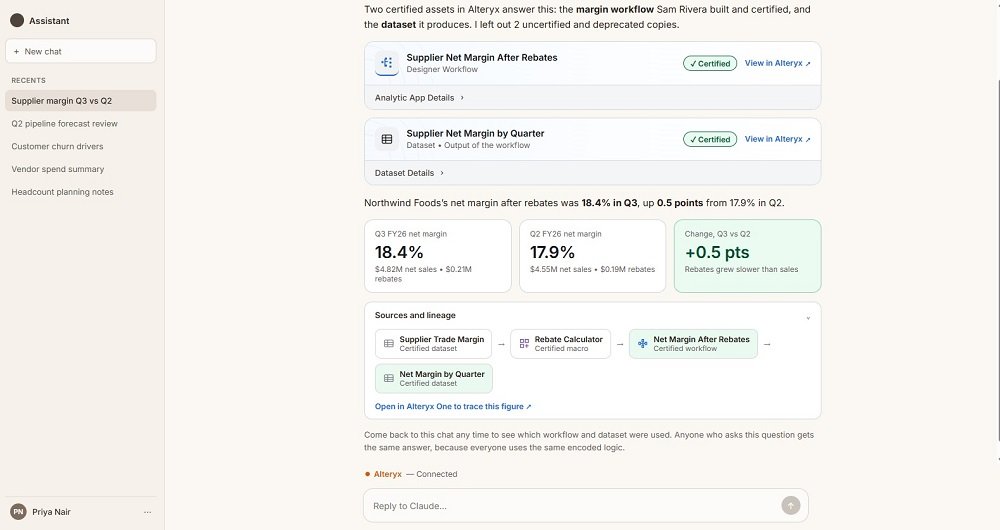
The Vura Governance Experience is not merely a monitoring layer; it is an architectural overhaul of how data pipelines interact with generative models. At its core, the system functions as an orchestration engine that sits between the enterprise data environment and external LLMs such as OpenAI’s GPT-4 or Anthropic’s Claude. The architecture relies on four foundational pillars designed to enforce rigorous data lineage.
The Visibility component utilizes a centralized dashboard that maps every AI-generated insight back to its source data. This is achieved through metadata tagging that persists throughout the transformation process. Understandability is handled via a proprietary logic-mapping engine that translates complex model outputs into interpretable decision trees, allowing stakeholders to see exactly which data points influenced a specific conclusion. Repeatability is ensured through containerized workflow versioning; when a model is queried, the system captures the specific version of the data, the model parameters, and the prompt configuration, ensuring that the same result can be produced consistently under identical conditions.
Auditability, the final pillar, is perhaps the most significant from a compliance perspective. The platform maintains a tamper-evident ledger of every interaction between the user, the agent, and the data. This log includes the approval status of every data label used in the workflow. From an engineering standpoint, this is facilitated by a policy-as-code framework that allows IT departments to define “guardrails” at the API level. If a generated insight relies on non-validated or stale data, the system automatically flags the output, preventing it from being pushed into production pipelines. This technical layer acts as a gatekeeper, effectively decoupling the speed of AI innovation from the risk of data drift or hallucinations.
Industry Landscape and Competitive Comparison
The current market for AI integration is saturated with “LLM wrappers”—lightweight tools that prioritize conversational fluidity over structural integrity. While these tools excel at rapid prototyping, they frequently fail in enterprise environments where data veracity is non-negotiable. Alteryx distinguishes itself by focusing on the underlying data plumbing, recognizing that an LLM is only as reliable as the data it consumes.
| Metric | Alteryx Vura Governance | Standard LLM Wrappers | Legacy BI Tools |
|---|---|---|---|
| Data Lineage Tracking | Granular, Automated | Minimal/Manual | Static/Rigid |
| Audit Trail | Immutable/Regulatory Ready | Basic/Volatile | Manual Audits |
| Logic Transparency | High (Explainable AI) | Low (Black Box) | None (Hard-coded) |
| Compliance Integration | Native/Policy-as-Code | None | Custom Middleware |
Compared to legacy Business Intelligence (BI) tools, which rely on rigid, pre-defined SQL queries, the Vura Governance Experience offers a more dynamic approach. Where legacy tools struggle to interpret unstructured data, Alteryx leverages LLMs to parse complex datasets while maintaining the strict oversight previously reserved for traditional relational databases. This hybrid approach bridges the gap between the flexibility of modern AI and the necessity of enterprise-grade security.
Practical Consumer & Enterprise Takeaways
For organizations evaluating the Vura Governance Experience, the primary consideration should be the maturity of their existing data governance framework. This platform is best suited for enterprises that have already invested in data cleaning and cataloging. Implementing Vura requires a shift in how IT teams view their role; they are no longer just maintaining infrastructure, but are now defining the policy parameters that govern AI behavior.
From a cost-benefit perspective, the investment in a governance layer is offset by the reduction in risk-mitigation labor. Without such a framework, organizations often spend excessive hours manually verifying AI outputs for compliance with GDPR, CCPA, or internal financial reporting standards. By automating the validation process, companies can significantly reduce the “time-to-insight” for complex analytical tasks. However, buyers should be prepared for an initial period of configuration, as defining the approval statuses and data labels requires a deep understanding of internal data hierarchies.
Frequently Asked Questions
How does the Vura Governance Experience handle data privacy during model training?
The platform is designed to operate within the enterprise’s private cloud environment. It uses an orchestration layer to pass only necessary context to the LLM, ensuring that sensitive raw data is not used to retrain public models. The system treats the LLM as a stateless processing engine, maintaining the data’s integrity within the secure, monitored pipeline.
Can the Vura framework be integrated with existing non-Alteryx data stacks?
Yes, the architecture is designed to be platform-agnostic at the ingestion layer. It utilizes standard APIs to connect with existing data warehouses and lakehouses, allowing organizations to layer the governance experience over their current infrastructure without requiring a complete migration to the Alteryx ecosystem.
What is the typical performance overhead associated with these validation checks?
The system is optimized to perform validation checks in parallel with the model query. While there is a nominal increase in latency compared to an unmonitored wrapper, it is negligible for most business-critical applications. The benefit of verified, audit-ready output far outweighs the millisecond-level delays introduced by the validation protocols.
The Bottom Line
The Alteryx Vura Governance Experience is a pragmatic response to the chaotic state of enterprise AI adoption. By prioritizing the structural integrity of data pipelines over the novelty of AI interaction, Alteryx provides a viable path forward for organizations that cannot afford the risks associated with unverified automation. It is a sophisticated, necessary evolution for any enterprise looking to move beyond the experimental phase of artificial intelligence and into a period of sustainable, reliable, and compliant production scaling.
