Technical Specifications and Architectural Breakdown
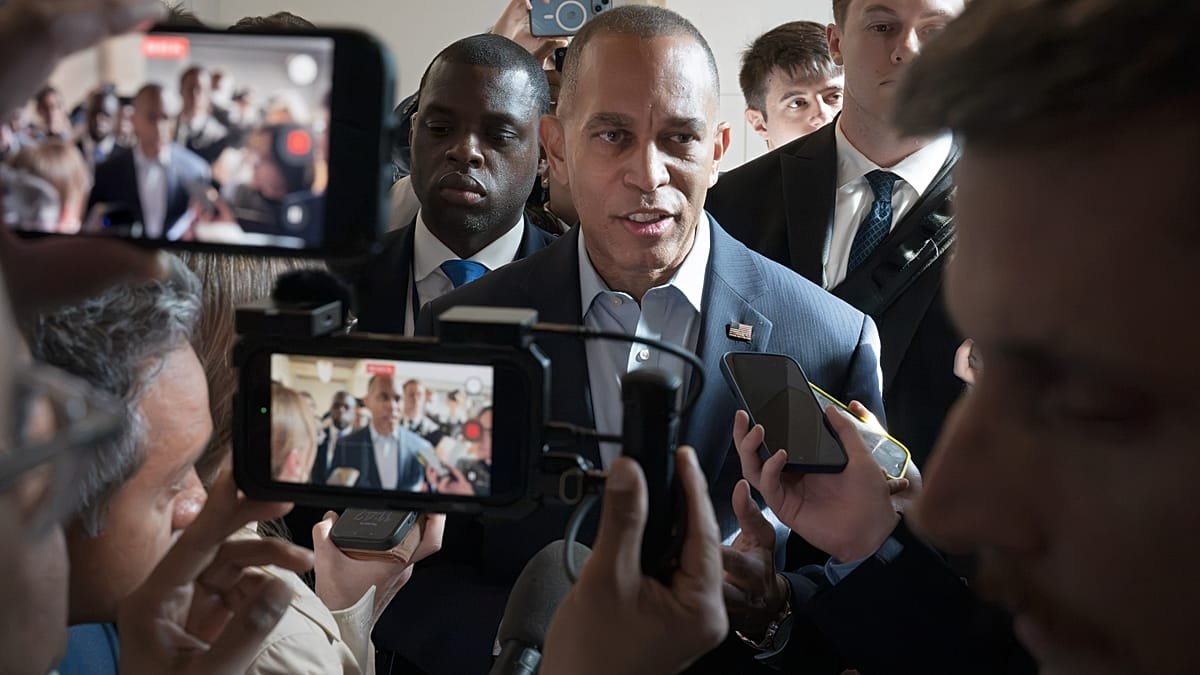
To understand the current legislative environment, one must view the Democratic caucus not as a monolith, but as a distributed network of competing interests and policy priorities. The leadership trio—Hakeem Jeffries as Speaker, Katherine Clark as Majority Leader, and Pete Aguilar as Majority Whip—functions as the central processing unit for this network. Their primary task is to manage the latency between the progressive flank’s demands for radical policy updates and the moderate caucus’s preference for incremental stability.
The architectural challenge lies in the shift away from the top-down, centralized command structure that defined the Nancy Pelosi era. In this new, decentralized model, the leadership must rely on constant, real-time negotiation to secure the necessary votes for legislative passage. This requires a robust communication protocol that can handle high-frequency feedback from various ideological nodes within the party. The “binding commitments” sought by progressive lawmakers act as hard-coded requirements that must be integrated into the legislative roadmap. Failure to reconcile these inputs could lead to system instability, manifesting as stalled bills or public fractures during critical floor votes.
Furthermore, the legislative strategy is being optimized for a narrow margin of error. With the caucus operating in an environment where every vote carries significant weight, the leadership’s ability to conduct predictive modeling on policy outcomes is essential. Jeffries must ensure that each legislative package is modular enough to accommodate specific amendments without compromising the structural integrity of the broader agenda.
Industry Landscape and Competitive Comparison
The transition toward the Jeffries-led era occurs against a backdrop of shifting political demographics and evolving voter expectations. When comparing the current leadership configuration to previous iterations, it is evident that the party is prioritizing a generational and demographic pivot to maintain its competitive advantage. The focus is no longer solely on longevity in office, but on the ability to manage a diverse, high-output workforce of representatives.
| Leadership Metric | Pelosi Era (Legacy) | Jeffries Era (Current) |
|---|---|---|
| Decision-Making Model | Centralized/Hierarchical | Distributed/Collaborative |
| Caucus Communication | Top-Down Directives | Real-Time Negotiation |
| Policy Implementation | Standardized/Uniform | Modular/Adaptive |
This comparison highlights the transition from a monolithic control structure to a more adaptive, responsive framework. While the Pelosi model was optimized for high-volume, party-line legislation, the Jeffries model is being designed to handle the increased complexity of a more vocal and segmented caucus. The success of this new configuration will be measured by the ability to maintain throughput in an environment characterized by increased ideological friction.
Practical Consumer & Enterprise Takeaways
For stakeholders monitoring the legislative output of the House, the transition to Hakeem Jeffries suggests a more volatile, yet potentially more inclusive, policy environment. Enterprise interests should prepare for a legislative landscape where policy outcomes are less predictable and subject to more frequent, granular amendments. The move toward a decentralized leadership structure means that lobbying efforts must be directed toward a broader range of influence nodes rather than a single point of contact.
From a strategic standpoint, the “upgrade” to this new leadership team carries both benefits and risks. The primary benefit is improved alignment with the evolving priorities of the party’s base, which could result in more durable legislative solutions. The risk, however, is increased operational overhead and the potential for gridlock if the internal negotiation protocols fail to resolve conflicts in a timely manner. Observers should watch the January session closely; the efficiency of the initial vote will serve as a baseline performance metric for the remainder of the term.
Frequently Asked Questions
What are the primary hurdles Hakeem Jeffries faces in securing his position?
The primary hurdle is managing the demands of the progressive wing of the party. These members are seeking specific, binding commitments on policy issues such as campaign finance reform and international relations. Balancing these demands with the needs of more moderate members is the core challenge of his leadership.
How does the role of Majority Whip change under the current leadership team?
Under Pete Aguilar, the role of the Majority Whip is shifting toward a more data-driven, consensus-building function. Rather than simply enforcing party discipline, the Whip must now act as a mediator, ensuring that the disparate needs of various caucus factions are accounted for before bills reach the floor.
What is the significance of the shift to a decentralized power structure?
This shift reflects a recognition that the modern Democratic caucus is too ideologically diverse to be managed through traditional, top-down methods. By decentralizing power, the leadership hopes to increase buy-in from all factions, thereby reducing the likelihood of internal dissent during critical legislative votes.
The Bottom Line
The ascent of Hakeem Jeffries represents a pivotal moment for the House of Representatives. By transitioning from a centralized, legacy-driven leadership model to a more decentralized, adaptive framework, the Democratic caucus is attempting to reconcile its ideological diversity with the practical necessity of legislative output. While the pressure from the progressive flank remains a significant variable, the leadership trio’s focus on inclusive, modular policy-making suggests a deliberate attempt to modernize the party’s operational core. The upcoming January session will serve as the definitive benchmark for this new strategy, revealing whether this architecture can sustain the demands of a high-stakes legislative environment.
