Technical Specifications and Architectural Breakdown
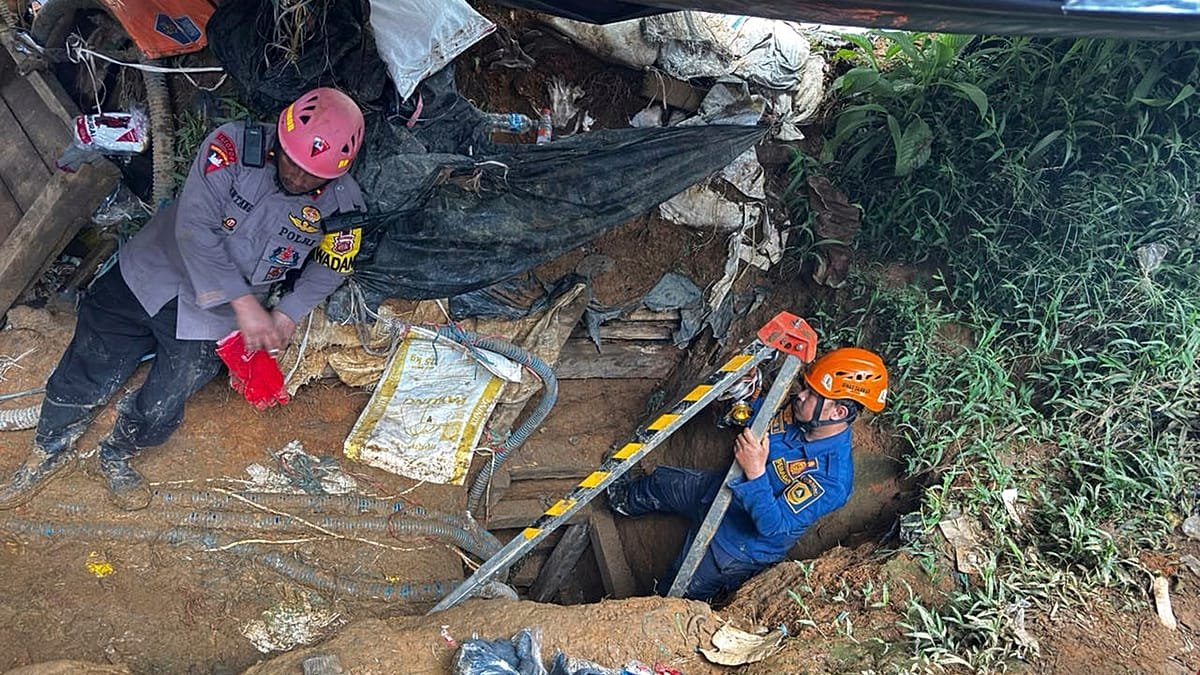
The engineering challenges inherent in an illegal gold mine are profound, primarily due to the lack of geological surveying and structural integrity assessments. Unlike professional operations, which utilize geotechnical modeling to predict ground behavior, these clandestine shafts are often sunk with minimal reinforcement. In the Bogor site, the shaft reaches depths of 100 metres—a distance that complicates every facet of rescue and extraction.
The hydraulic management of such a site is the most significant technical hurdle. In professional mining, water control is managed through permanent drainage galleries, sump pumps, and sophisticated dewatering systems designed to handle groundwater ingress and seasonal surges. Conversely, the illegal site in Bogor relies on makeshift pumping configurations that are easily overwhelmed by river seepage. Rescuers are currently forced to deploy heavy-duty submersible pumps to counteract the flow, a process that is hampered by the lack of stabilized power grids and the risk of further shaft collapse due to the weight of the equipment.
Furthermore, the structural stability of these shafts is non-existent. Professional mining employs rock bolting, shotcrete, and continuous structural monitoring sensors to detect micro-movements in the earth. The illegal shafts rely on gravity and luck, with timber supports that fail under the pressure of saturated soil. The rope-access systems currently being deployed by the Jakarta Search and Rescue Agency are high-risk, as the surrounding ground is compromised by the initial flooding, creating a dynamic environment where the rescue site itself is prone to secondary collapses.
Industry Landscape and Competitive Comparison
The disparity between artisanal, illegal operations and state-run or international mining entities is defined by the integration of automation and safety telemetry. Professional firms, such as PT Antam, operate under strict regulatory frameworks that mandate real-time monitoring of air quality, seismic activity, and structural load-bearing capacity. These systems allow for early warning and automated evacuation protocols, features entirely absent in the informal sector.
| Feature | Illegal Mining Operation | Professional Industrial Mining |
|---|---|---|
| Geological Surveying | None; visual/anecdotal | Advanced 3D LiDAR & Seismic |
| Structural Support | Raw timber/None | Engineered rock bolts & steel |
| Safety Monitoring | Manual/Reactive | IoT-enabled real-time telemetry |
| Regulatory Compliance | Zero | Strict governmental oversight |
The comparison illustrates that the “cost” of illegal mining is not merely financial but social and environmental. While informal miners often justify their work through economic desperation, the lack of investment in basic engineering infrastructure leads to catastrophic failures that destroy local ecosystems and claim lives at a rate far exceeding the industrial average.
Practical Consumer & Enterprise Takeaways
For stakeholders in the precious metals supply chain, the Bogor incident underscores the necessity of rigorous “chain of custody” verification. Enterprises and consumers alike must recognize that gold sourced from unregulated environments carries a heavy hidden cost. From a procurement standpoint, the focus must shift toward certified “conflict-free” or “responsible” gold sourcing.
Companies should prioritize suppliers who demonstrate transparency in their extraction methods. Upgrading to supply chains that utilize blockchain-based tracking or third-party audits ensures that the gold entering the market was not extracted under conditions that bypass safety regulations. For investors, the risk associated with artisanal mining stocks or holdings is significant; companies that fail to police their concessions or that allow illegal sub-contracting are increasingly vulnerable to operational shutdowns, legal liability, and severe reputational damage. The cost-benefit trade-off of sourcing cheaper, unverified gold is increasingly negative when one accounts for the potential for humanitarian crises and the resulting regulatory crackdowns that can freeze entire supply networks.
Frequently Asked Questions
Why is it so difficult to rescue miners from an illegal gold mine compared to a professional one?
Professional mines have detailed blueprints, established ventilation shafts, and redundant emergency power systems. Illegal mines lack documentation of the shaft layout, making it impossible for rescuers to know where trapped individuals are located or how the tunnels connect. Furthermore, the lack of structural reinforcement means any attempt to clear debris or pump water risks triggering a total collapse of the tunnel.
What technology could prevent such disasters in the future?
The implementation of low-cost, remote sensing technology—such as satellite-based ground deformation monitoring—could help authorities identify illegal mining activity before it reaches dangerous depths. Additionally, enforcing the use of standardized safety equipment and providing training for local communities could mitigate some risks, though the core solution remains the formalization and regulation of these activities.
How does the lack of regulation affect the environmental impact of these mines?
Without oversight, illegal mines frequently use toxic chemicals like mercury and cyanide to process gold, which are then dumped directly into local water tables. This creates long-term health crises for surrounding communities that persist long after the mine has been abandoned, often resulting in permanent soil and water contamination.
The Bottom Line
The tragedy in Bogor is a stark reminder that technology and safety standards are not optional luxuries in the mining industry; they are the primary barrier between a productive operation and a mass-casualty event. As long as illegal mining remains a viable, albeit perilous, alternative to regulated industry, the cycle of disaster will continue. The path forward requires a dual approach: stricter enforcement of mining laws to dismantle unregulated sites and a commitment from the global market to reject gold that lacks a verifiable, ethical, and safe provenance. Until the industry closes the technological and regulatory gap, the human toll of the illegal gold trade will remain an unconscionable cost of doing business.
