Technical Specifications and Architectural Breakdown
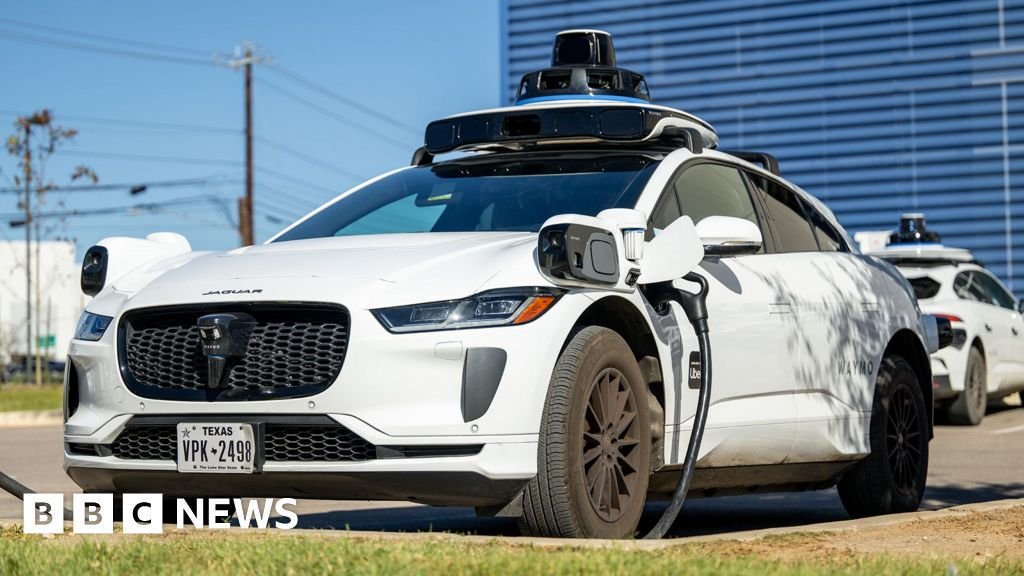
At the center of the driverless taxi experience is a sophisticated sensor fusion stack designed to replicate human perception with superhuman precision. Waymo’s current hardware generation utilizes a multi-modal approach, combining long-range LiDAR, 360-degree radar arrays, and high-dynamic-range cameras. The LiDAR units provide a precise 3D point cloud of the environment, while radar excels at detecting velocity and movement in adverse weather conditions. Cameras provide the semantic context—reading lane markings, traffic signals, and human gestures.
However, the recent highway incidents suggest that the bottleneck is not in the hardware’s ability to “see,” but in the “path planning” logic—the software layer that translates sensor data into actionable maneuvers. Current neural networks are trained on vast datasets of typical driving scenarios, but temporary road modifications, such as orange cones, shifting lane markers, and hand-signaling construction workers, introduce high-entropy environments that the system struggles to classify.
Engineering teams are now focused on refining the “semantic segmentation” of these neural networks. This involves retraining the systems to recognize non-standard road geometries and prioritize human-in-the-loop signals over static map data. The challenge lies in ensuring that the system does not become overly cautious—a phenomenon known as “freezing” in robotics—where the vehicle refuses to move because it cannot reconcile the visual input with its pre-loaded high-definition maps. Balancing this aggressive decision-making with safety protocols is the primary hurdle for the next generation of autonomous software updates.
Industry Landscape and Competitive Comparison
The autonomous vehicle space remains a high-stakes race between firms with vastly different philosophical approaches. While Waymo has historically prioritized high-fidelity sensor suites, competitors like Tesla have opted for a “vision-only” approach, relying on cameras and aggressive neural network training. Meanwhile, other players like Zoox and Cruise have faced their own regulatory reckonings, reinforcing the reality that the path to full autonomy is non-linear.
| Provider | Primary Sensor Strategy | Current Operational Status |
|---|---|---|
| Waymo | LiDAR + Radar + Camera Fusion | Suspended on US Freeways |
| Tesla (FSD) | Vision-Only (Cameras) | Level 2+ Consumer ADAS |
| Zoox | LiDAR + Radar + Camera | Restricted urban testing |
The competitive landscape is shifting from who can demonstrate the most impressive demo to who can provide the most defensible safety record. Companies that prioritize modular, redundant sensor architectures currently hold an advantage in reliability, but they also face higher per-unit costs, which complicates the economics of scaling a taxi fleet. The ability to navigate highway speeds—where reaction times are measured in milliseconds—remains the ultimate benchmark for industry maturity.
Practical Consumer & Enterprise Takeaways
For consumers and enterprise partners, the current regulatory climate serves as a reminder that autonomous ride-hailing is still an emerging service rather than a commodity utility. Users should expect continued volatility in service availability. If your business model relies on autonomous logistics or fleet management, the current instability in freeway access necessitates a diversified transportation strategy. Do not phase out human-operated logistics or transit alternatives just yet; the “driverless” component remains a work in progress.
Furthermore, prospective users should maintain a high degree of situational awareness when utilizing these services in urban environments. While the technology is highly capable in predictable settings, the “edge cases”—construction, emergency vehicle interactions, and extreme weather—remain areas where the system may default to a safe-stop maneuver. Understanding that these vehicles are programmed to prioritize safety over efficiency is essential for setting realistic expectations regarding trip times and route flexibility.
Frequently Asked Questions
What is the primary cause of the current freeway suspension?
The suspension is primarily due to the system’s inability to reliably interpret dynamic construction zones. When the software encounters temporary road modifications that conflict with its pre-loaded high-definition maps, it risks making incorrect path-planning decisions, which the DMV has deemed a public safety hazard.
When will Waymo resume freeway operations?
There is no public timeline for the resumption of freeway services. Waymo must first submit a comprehensive safety remediation plan and demonstrate, through rigorous testing and simulation, that its software can navigate active construction and non-standard lane configurations without human intervention.
Is this a failure of the hardware or the software?
The issue is almost exclusively a software and logic failure. The sensor hardware is performing as intended, but the decision-making algorithms are struggling to process the semantic complexity of temporary road changes. The solution requires retraining neural networks to better interpret human-directed traffic signals and non-standard road markers.
The Bottom Line
The suspension of Waymo’s highway operations is not an indictment of autonomous technology, but rather a necessary maturation phase. The shift from urban street navigation to high-speed freeway transit introduces a level of complexity that existing software architectures are only beginning to master. For the industry to move forward, it must transition away from the “move fast and break things” ethos toward a more transparent, data-driven approach to safety. The future of the driverless taxi remains promising, but the road to full-scale deployment is longer and more technically demanding than the initial hype suggested. Success will be defined not by the speed of deployment, but by the consistency of safety in the face of the unpredictable.
