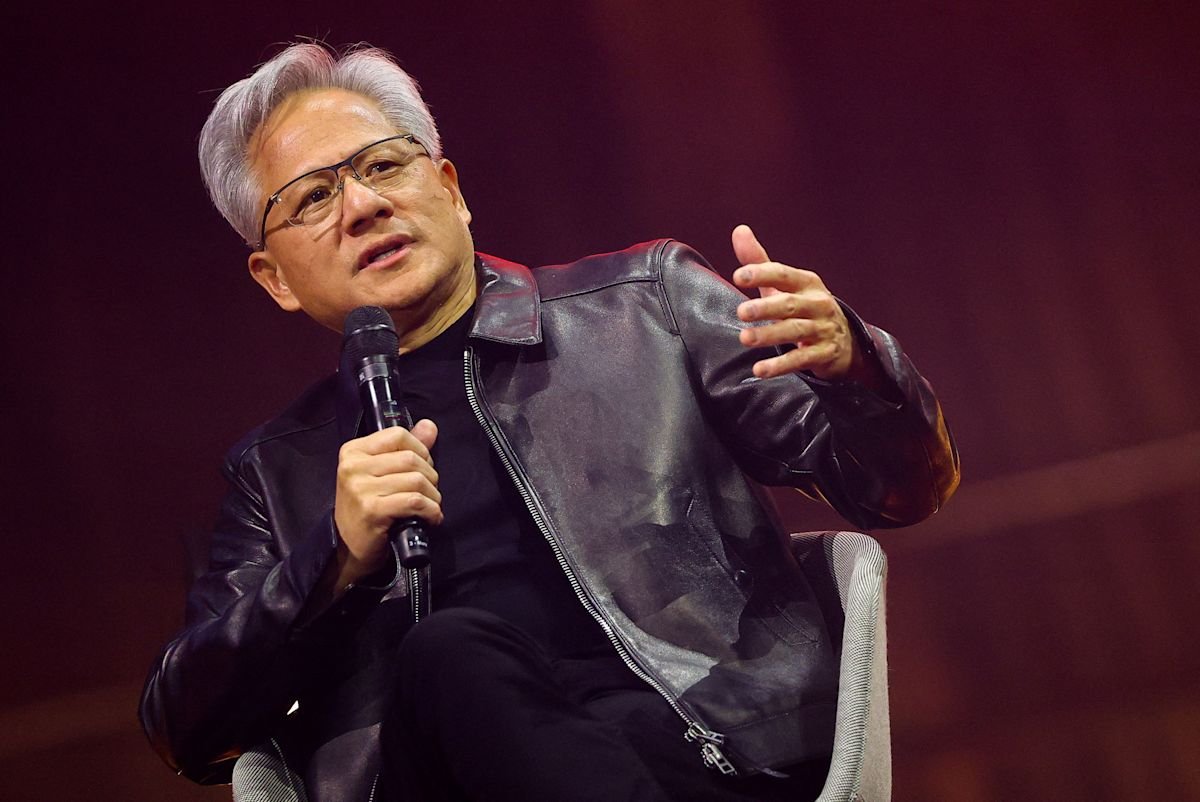
The global technology sector is reeling following the sudden departure of Jensen Huang from Nvidia, a move prompted by a board decision linked to allegations of personal conduct that intersect with sensitive national security interests. At the heart of this geopolitical and corporate storm is the Nvidia Blackwell GPU, a processor so vital to the global artificial intelligence infrastructure that any hint of compromised security triggers alarm bells in Washington and beyond. With Colette Kress stepping in as interim CEO, the company faces the monumental task of decoupling its most advanced hardware from a scandal that threatens to undermine its status as the bedrock of the modern AI economy.
Technical Specifications and Architectural Breakdown
The Nvidia Blackwell GPU represents a departure from traditional monolithic chip design, utilizing a multi-die architecture that pushes the boundaries of interconnect technology. Built on a custom TSMC 4NP process, the Blackwell architecture integrates two distinct silicon dies connected via a 10 TB/s chip-to-chip link. This design allows for a unified memory space that effectively behaves as a single processor, minimizing latency and maximizing throughput for large language model (LLM) training and inference.
Central to its performance is the second-generation Transformer Engine. This component dynamically adjusts precision—moving between FP8 and FP4 formats—to optimize power efficiency without sacrificing the accuracy required for high-parameter models. The Blackwell architecture also introduces a dedicated secure engine, a feature now under intense scrutiny by regulators. This hardware-level security layer is designed to protect model weights and proprietary data during compute cycles. If the integrity of this secure engine were compromised, it would theoretically allow an adversary to reconstruct sensitive AI models or intercept proprietary data streams, explaining the heightened involvement of the House Foreign Affairs Committee.
Beyond the silicon, the Blackwell ecosystem relies on the NVLink Switch System, which enables up to 576 GPUs to communicate at speeds reaching 1.8 TB/s in both directions. This level of interconnectivity is what separates Nvidia from its rivals, creating a unified fabric that allows massive clusters to function as a singular, cohesive supercomputer. The complexity of this design makes it a marvel of engineering, but also a singular point of failure for national security if the underlying firmware or design documentation is exposed to unauthorized entities.
Industry Landscape and Competitive Comparison
Nvidia’s dominance has been built on more than just raw performance; it is the result of a symbiotic relationship between hardware and the CUDA software stack. However, the current leadership vacuum and the security concerns surrounding the Blackwell platform have created an opening for competitors who have been steadily closing the gap in hardware efficiency. While Nvidia remains the standard, the market is beginning to weigh the risks of proprietary lock-in against the benefits of open-standard alternatives.
| Hardware | Performance Rating | Memory Bandwidth | Market Position |
|---|---|---|---|
| Nvidia Blackwell GPU | 10/10 | 8 TB/s | Dominant / High Risk |
| AMD Instinct MI300X | 8.5/10 | 5.3 TB/s | Growing / Enterprise Alternative |
| Intel Gaudi 3 | 7.5/10 | 3.7 TB/s | Niche / Cost-Effective |
The AMD Instinct series has gained significant traction among cloud service providers who prioritize memory capacity and raw throughput over the specific software ecosystem advantages of Nvidia. Intel, meanwhile, has positioned its Gaudi line as a power-efficient alternative for inference-heavy workloads. While neither currently matches the aggregate performance of a fully scaled Blackwell cluster, the reputational damage to Nvidia could accelerate the adoption of these alternatives as data centers seek to diversify their supply chain risks.
Practical Consumer & Enterprise Takeaways
For enterprise procurement officers, the immediate reaction to the leadership change should be one of cautious observation. The Nvidia Blackwell GPU remains, by every technical metric, the most capable hardware for large-scale AI deployment. Replacing this infrastructure would involve multi-year transitions and significant software refactoring. However, companies operating in sectors with stringent data classification requirements—such as defense, healthcare, and finance—must now conduct a comprehensive security audit of their existing Blackwell-based clusters.
Organizations should prioritize the following actions:
- Verify firmware integrity across all deployed Blackwell units to ensure no unauthorized modifications have occurred.
- Review the physical and digital access protocols for any facility housing Blackwell clusters.
- Evaluate the feasibility of hybrid environments, incorporating non-Nvidia hardware for non-critical workloads to mitigate the risk of total ecosystem dependency.
The cost-benefit trade-off remains tilted toward Nvidia for those who require the absolute peak of performance, but the premium for that performance now includes a new, non-trivial risk factor: supply chain and security volatility.
Frequently Asked Questions
Is the Nvidia Blackwell GPU still safe to deploy in secure environments?
There is currently no evidence of a hardware-level vulnerability in the Blackwell architecture itself. The concern relates to the potential exposure of sensitive design documentation and proprietary security protocols during the period of the former CEO’s alleged compromise. Organizations should maintain current security patches and monitor official communications from the interim leadership.
Will the leadership change impact the availability of Blackwell units?
Supply chain stability is a primary concern. While production lines are automated and managed by TSMC, the administrative and strategic shifts resulting from a change in CEO can cause temporary delays in logistics and support. Expect potential fluctuations in lead times for new orders as the company stabilizes its executive operations.
Should companies consider moving away from the Nvidia ecosystem?
Diversification is a standard risk management strategy. While the Blackwell GPU is currently unrivaled in performance, the current situation highlights the dangers of relying on a single vendor for critical infrastructure. Companies should maintain a multi-vendor strategy where possible, though a full migration is unlikely to be necessary for most commercial enterprises.
The Bottom Line
The resignation of Jensen Huang marks the end of an era for Nvidia, but the company’s technical foundation remains robust. The Blackwell GPU is a testament to years of aggressive R&D and engineering excellence. However, the intersection of high-end hardware and national security has moved Nvidia into a new, more precarious phase of its existence. The company’s ability to survive this scandal depends on Colette Kress’s ability to reassure both the market and the federal government that the integrity of its technology remains uncompromised. For the tech industry, the lesson is clear: in an age where AI is a geopolitical asset, the hardware that powers it is no longer just a commodity—it is a matter of statecraft.
