Technical Specifications and Architectural Breakdown
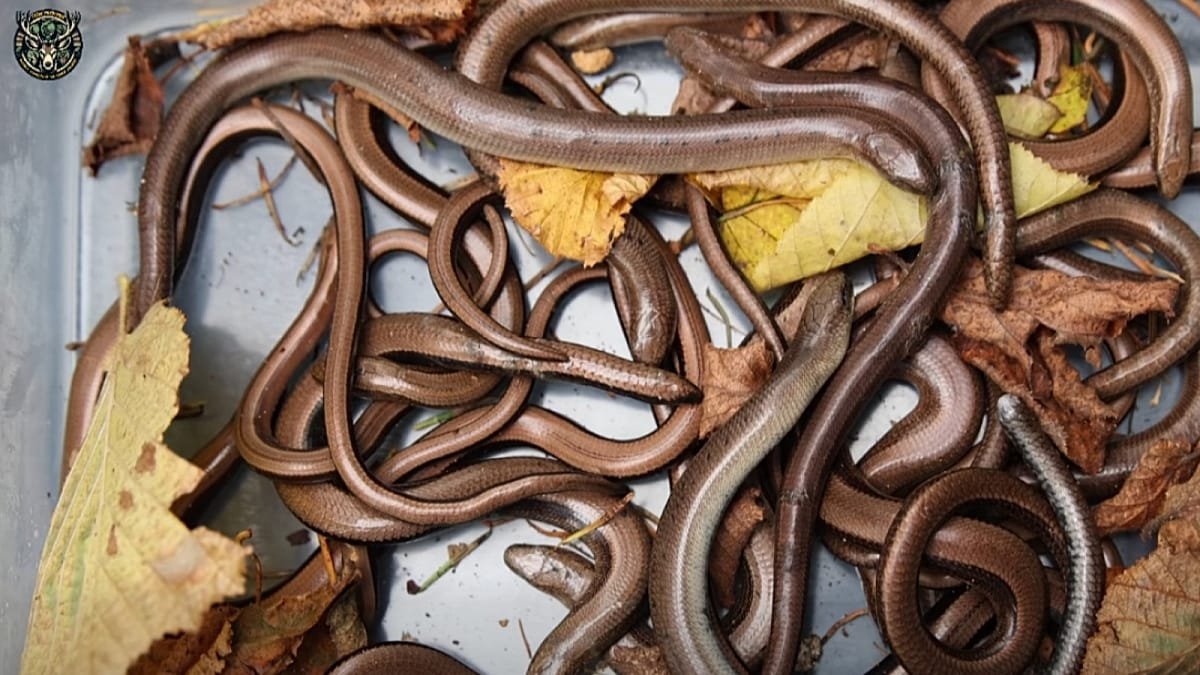
The water meter chamber in question represents a classic failure in “wildlife-inclusive” engineering. From a structural perspective, these chambers are designed for thermal stability and moisture control—attributes that, while ideal for protecting sensitive utility components, inadvertently mimic the subterranean hibernacula required by reptiles like Anguis fragilis (slow worms). The concrete walls of the chamber, characterized by a smooth, high-frictionless finish, created a vertical barrier that the slow worms could not scale once they entered the pit.
For the biologists at Leśne Pogotowie, the primary technical challenge lay in the physiological state of the subjects. The 19 slow worms were in a state of torpor, a metabolic depression strategy that allows ectothermic animals to survive sub-optimal temperatures. During this phase, the animals’ heart rates drop significantly, and their responsiveness to external stimuli is severely limited. Any attempt at extraction required a precise thermal gradient management protocol. If the ambient temperature were raised too quickly during the transition from the chamber to the rehabilitation facility, the animals could have suffered from metabolic shock or premature emergence. The rescue team utilized infrared thermal imaging to monitor the core temperatures of the cluster, ensuring that the extraction process remained within a narrow 2-degree Celsius variance to maintain the animals’ dormant state while facilitating safe transport.
Industry Landscape and Competitive Comparison
The management of wildlife within utility infrastructure is an emerging sub-sector of environmental engineering. As urban sprawl continues to fragment natural corridors, utility companies are increasingly tasked with implementing “wildlife-proof” designs. This involves retrofitting chambers with textured egress ramps or low-profile escape grates that allow small vertebrates to exit without compromising the integrity of the utility hardware. Below is a comparative overview of how different infrastructure approaches impact local biodiversity.
| Infrastructure Type | Wildlife Impact | Maintenance Requirements |
|---|---|---|
| Standard Smooth-Walled Concrete | High Risk (Trapping/Mortality) | Low (Standard Inspection) |
| Textured Egress-Enabled Chambers | Minimal (Self-Correcting) | Moderate (Periodic Cleaning) |
| Integrated Smart-Sensor Pits | Negligible (Active Monitoring) | High (Electronic Calibration) |
While standard concrete chambers remain the industry benchmark due to their cost-effectiveness and durability, they are increasingly viewed as a liability. The shift toward “smart” infrastructure—which utilizes IoT sensors to detect not just water flow, but also the presence of thermal signatures within the pit—is gaining traction among European utility firms. These systems provide real-time data, allowing technicians to intervene before a population of 19 slow worms becomes a logistical and ethical crisis.
Practical Consumer & Enterprise Takeaways
For enterprise stakeholders managing facility grounds or utility networks, the lesson is clear: infrastructure is never truly isolated from its environment. The 19 slow worms incident demonstrates that even minor oversights in design can lead to reputational damage and the need for costly, reactive ecological interventions. Organizations should prioritize the integration of “escape-friendly” designs during the planning phase of utility installation. This includes the installation of coarse-aggregate ramps or the application of textured coatings to the interior walls of subterranean chambers.
For private landowners, the takeaway is equally relevant. If you maintain a water meter or septic access point, it is prudent to perform a pre-winter inspection. Ensuring that these pits are tightly sealed or, conversely, fitted with a simple ramp, can prevent your property from becoming a lethal trap for beneficial local fauna. Slow worms are highly effective at controlling garden invertebrate populations, including
Frequently Asked Questions
Are slow worms actually snakes, and should I be concerned if I find them? No. Despite their legless appearance, slow worms are lizards. They are completely harmless to humans and pets. Their presence is a strong indicator of a healthy, balanced ecosystem in your garden or property.
Why is it dangerous to move a hibernating animal to a warmer environment? Hibernation is a metabolic state strictly calibrated to the animal’s energy reserves. If an animal is warmed up too quickly, its body begins to burn energy reserves prematurely. If it cannot find food—which is unavailable in winter—the animal will likely starve or succumb to physiological stress.
What should I do if I find trapped wildlife in a utility chamber? Do not attempt to handle the animals if you are unsure of the species or the proper safety protocols. Contact a local wildlife rehabilitation expert or a professional pest management service that specializes in humane extraction. Document the location and, if possible, take a photo from a distance to assist the experts in preparing the correct equipment.
The Bottom Line
The rescue of the 19 slow worms in Poland is a reminder that our built environment is constantly interacting with the natural world, often in ways that are invisible until a crisis occurs. By applying better engineering standards and fostering a more informed approach to local ecology, we can mitigate these hazards. The transition toward infrastructure that accounts for native biodiversity is not merely an act of environmental stewardship; it is a necessary evolution of modern utility management. By addressing these technical gaps today, we reduce the likelihood of future interventions and ensure that our infrastructure serves its purpose without unintended casualties.
