Technical Specifications and Architectural Breakdown
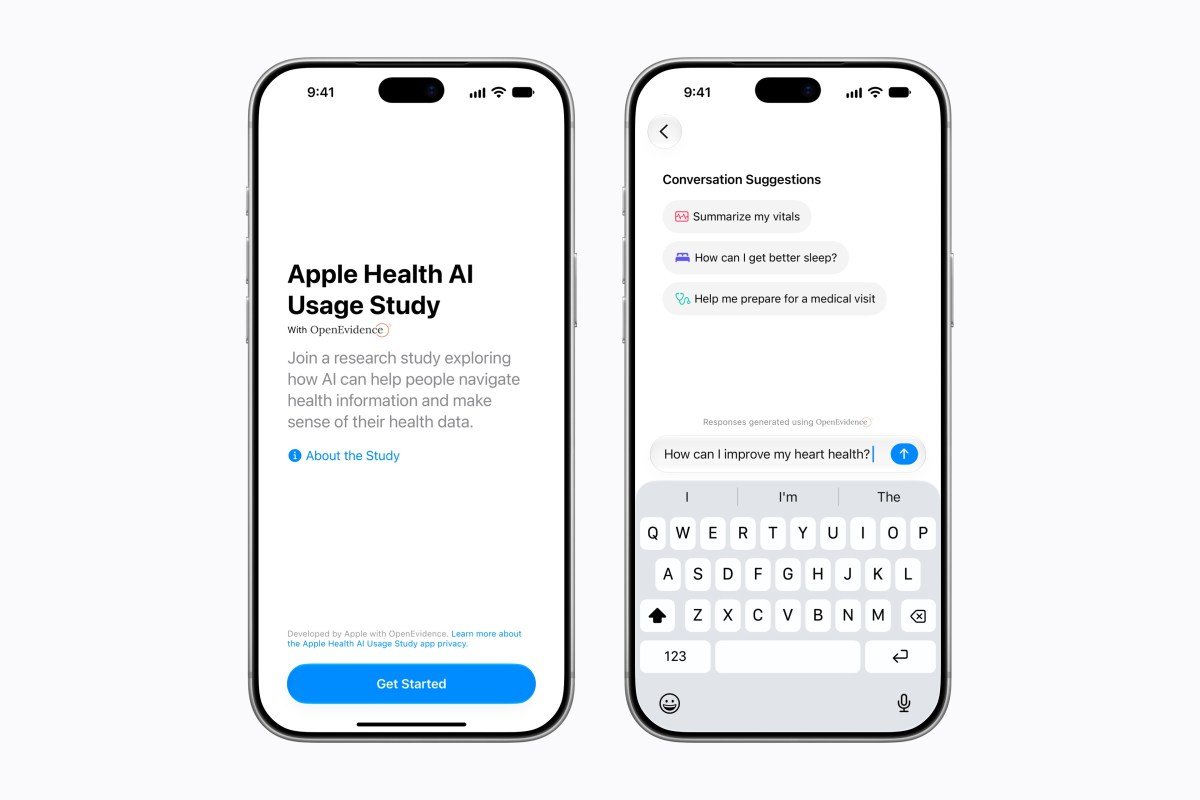
The core of this health AI study rests on a shift from general-purpose foundation models to a Retrieval-Augmented Generation (RAG) architecture that prioritizes source attribution. Unlike traditional LLMs, which derive responses from a vast, heterogeneous corpus of internet data, the Apple-OpenEvidence framework restricts its knowledge base to high-authority, peer-reviewed journals and clinical trials. This methodology minimizes the likelihood of “hallucinations”—the tendency of AI to confidently invent facts—by forcing the model to cite specific, verifiable medical literature for every assertion.
The technical protocol involves a multi-stage validation process. First, user queries are processed through a semantic routing layer that identifies medical intent. Once identified, the system performs a targeted lookup within a curated, indexed database of medical evidence. The model is then constrained to synthesize a response based exclusively on this retrieved data. This “grounding” technique ensures that the output is not just statistically probable, but clinically defensible. Furthermore, the 12-month duration of the study suggests that Apple is collecting longitudinal data on user trust, response latency, and the efficacy of citation-based interfaces in real-world clinical or semi-clinical scenarios. By prioritizing provenance over raw generative capability, the engineering team is creating a sandbox where medical safety is a hard-coded constraint rather than an emergent property.
Industry Landscape and Competitive Comparison
The current AI landscape is characterized by a “race to scale,” where companies prioritize the breadth of training data over the accuracy of specific domains. While OpenAI’s ChatGPT, Google’s Gemini, and other mainstream tools have become de facto medical advisors for millions, they remain fundamentally unsuited for diagnostic or prescriptive tasks due to their reliance on unverified training sets. Apple’s entry into this space suggests a departure from the “move fast and break things” philosophy that has permeated Silicon Valley’s approach to generative AI.
| Feature | Traditional LLMs | Apple/OpenEvidence Model |
|---|---|---|
| Data Source | General Web Crawl | Peer-Reviewed Journals |
| Verification | Probabilistic/Stochastic | Clinically Grounded/Attributed |
| Privacy Focus | Model Training/Retention | Anonymized/Local Processing |
| Use Case | General Creativity/Chat | Evidence-Based Medical Inquiry |
The competitive divide is stark. While competitors emphasize conversational fluency and creative output, Apple is positioning its health AI study as a utility for high-stakes information retrieval. For the healthcare industry, this represents a transition from “AI as a chatbot” to “AI as a research assistant.” By focusing on the provenance of information, Apple is effectively building a moat around its ecosystem, appealing to users who require a high degree of confidence in the medical data they consume.
Practical Consumer & Enterprise Takeaways
For the average consumer, this development suggests a future where health-related interactions with hardware—be it an Apple Watch or an iPhone—become significantly more reliable. However, users should maintain a pragmatic outlook. Even with clinically grounded AI, these tools are designed to augment, not replace, professional medical consultation. The primary benefit for consumers will be the reduction of “noise” in health searches, as the AI acts as a filter for high-quality, evidence-based information.
For enterprise stakeholders and healthcare providers, the implications are more profound. This study indicates that Apple is preparing to integrate more sophisticated health analytics into its enterprise services. Organizations evaluating the adoption of health AI should prioritize tools that offer clear citation trails and auditability. The cost-benefit trade-off here is clear: while a grounded model may lack the conversational variety of an unconstrained LLM, it provides the legal and ethical safety required for medical applications. Decision-makers should look for systems that mirror this architecture—prioritizing data integrity over pure parameter counts.
Frequently Asked Questions
How does this health AI study differ from standard medical search results?
Standard search results provide links that a user must evaluate for credibility. This AI model synthesizes that information into a coherent answer, specifically drawing from peer-reviewed journals, effectively doing the “reading” for the user while providing an audit trail for the source material.
Will this technology lead to automated medical diagnoses?
Current research and industry standards suggest that AI remains a support tool. Apple’s focus on grounding is intended to provide better information to both patients and providers, but it is not currently positioned as a replacement for clinical diagnosis by a licensed physician.
How does Apple address the privacy concerns inherent in health data?
Apple’s architecture emphasizes local processing and anonymization. By keeping the data flow restricted to vetted sources and maintaining strict user privacy protocols, the company aims to avoid the common pitfall of training models on sensitive personal health information.
The Bottom Line
Apple’s partnership with OpenEvidence represents a mature, measured approach to a volatile technological sector. By prioritizing clinical grounding over the speculative nature of general-purpose generative AI, Apple is addressing the fundamental flaw of modern medical chatbots: the lack of accountability. While the 12-month study is still in its infancy, the framework it establishes—one of academic rigor, citation-based synthesis, and privacy-first engineering—sets a new standard for the industry. For the consumer, this signifies a shift toward a more reliable, albeit more conservative, digital health experience. For the AI industry, it serves as a necessary reminder that in the realm of human health, accuracy is the only metric that truly matters.
